

Why Leather Can Be a Sustainable Choice — If It’s Done Properly
Leather gets talked about a lot these days, usually in very black-and-white terms. It’s either framed as something outdated and wasteful, or quietly replaced with “vegan” alternatives that sound better on paper than they perform in real life.
The truth sits somewhere in the middle.
Leather isn’t automatically sustainable. But it isn’t automatically bad either. When it’s sourced responsibly, made to last, and not treated as disposable fashion, leather can actually be one of the more sensible long-term material choices — especially for everyday items like belts.
The Part Most Sustainability Arguments Skip: How Long Things Last
A belt that lasts fifteen years is almost always more sustainable than one that lasts twelve months — regardless of what it’s made from.
That’s the uncomfortable part many conversations avoid. Replacement frequency matters. A lot.
Cheap belts, whether synthetic or low-grade leather, usually fail the same way: surface cracking, peeling edges, stretched holes, warped buckles. Once that starts, they’re done. There’s no repairing them.
A properly made leather belt behaves differently. It doesn’t fall apart — it changes. It softens. It darkens slightly. It carries wear instead of breaking under it.
That alone shifts the sustainability conversation.
Why “Vegan Leather” Isn’t Automatically Better
A lot of so-called vegan leather is plastic. PU, PVC, blended synthetics. They’re oil-based, energy-intensive to produce, and designed with a fairly short lifespan in mind.
Once they crack or peel, that’s it. They can’t be repaired. They don’t age. And they don’t biodegrade in any meaningful way.
We’ve already unpacked this in our piece on PU leather and faux alternatives, but it’s worth repeating: a nicer label doesn’t always mean a better material.
Longevity and end-of-life matter just as much as origin.
Leather Isn’t the Primary Product — It’s the Leftover
Another thing that often gets missed: leather comes from hides that already exist. Animals aren’t raised for belts.
Those hides either get used, or they get discarded. Turning them into long-lasting goods gives them a second life instead of letting them become waste.
That doesn’t mean all leather production is fine — it just means the material itself isn’t the villain it’s sometimes made out to be. What matters is what happens next.
Why Tanning Standards Actually Matter
This is where leather can go very right or very wrong.
The tanning process is where most of the environmental impact lives. Poorly controlled tanning can be genuinely harmful. Responsible tanning, on the other hand, looks very different.
That’s why Buckle1922 works with Leather Working Group tanneries. LWG certification isn’t a marketing badge — it measures water use, chemical handling, waste treatment, and energy efficiency.
Same material. Completely different outcomes.
Repairability Is an Underrated Sustainability Feature
One of leather’s biggest advantages rarely gets mentioned: you can fix it.
Leather belts can be conditioned, re-stitched, re-edged, even fitted with new hardware. That keeps them in use instead of sending them straight to landfill.
Synthetic belts don’t offer that option. Once they go, they go.
Sustainability isn’t just about how something is made — it’s about whether it’s designed to be thrown away.
Local Manufacturing Changes the Equation
There’s also the question of where things are made.
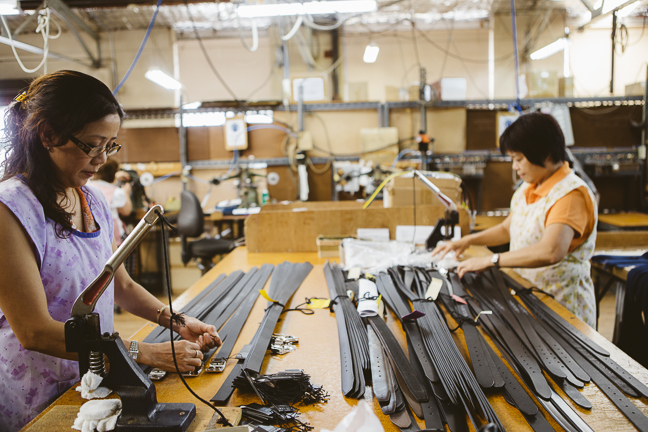
Buckle manufactures locally and is accredited by Ethical Clothing Australia, which means fair labour standards, transparent supply chains, and real accountability.
Local production reduces freight, reduces hidden labour issues, and makes quality control far easier. You can’t outsource responsibility when you’re making things close to home.
That matters more than people realise.
Does Leather Biodegrade? Yes — With a Caveat
Natural leather will break down over time, especially when it hasn’t been sealed under heavy plastic coatings. It doesn’t behave like synthetic materials, which fragment rather than decompose.
That doesn’t make leather impact-free. Nothing is. But compared to plastic-based alternatives, its end-of-life footprint is very different.
Again, the details matter.
When Leather Isn’t a Sustainable Choice
It’s worth being honest.
Leather isn’t sustainable when it’s:
- heavily coated to hide poor quality
- made cheaply and replaced often
- processed without environmental controls
- treated as fast fashion
Leather isn’t automatically good. It just has the potential to be good when it’s done properly.
That’s why understanding materials matters — and why our Leather Guide exists in the first place.
Sustainability Is Mostly About Fewer, Better Decisions
You don’t make a wardrobe sustainable overnight. You just make slightly better choices over time.
Choosing something once instead of five times. Repairing instead of replacing. Buying items that improve with use instead of falling apart.
When leather is handled responsibly, it fits that approach naturally.
That’s the space Buckle operates in — not trends, not shortcuts, just products meant to stay in use for a long time.
Related Questions
Is leather more sustainable than vegan leather?
Often, yes — when it’s responsibly sourced and built to last.
Does leather break down naturally?
Natural leather does. Synthetic alternatives don’t.
What makes leather ethical?
Responsible sourcing, controlled tanning, fair labour, and products designed for longevity.