

How to Spot a Well-Made Leather Item in 30 Seconds
Most people assume you need years of experience to judge leather quality. You don’t.
In reality, you can tell a lot about a leather belt, wallet, or accessory in under half a minute — if you know where to look. Quality leather goods leave clues. Poorly made ones try to hide them.
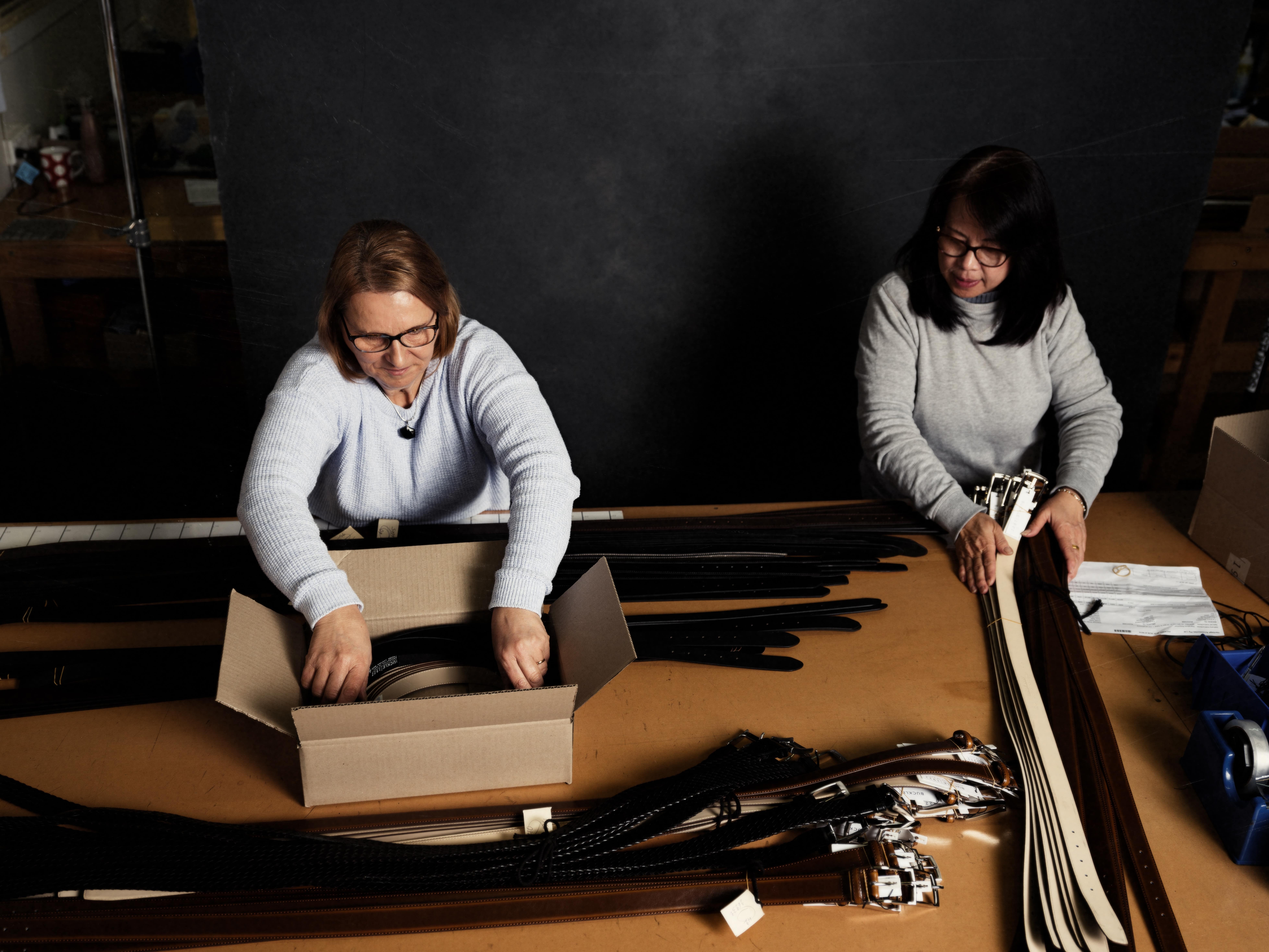
Here’s a simple, no-nonsense way to spot real craftsmanship fast, whether you’re shopping online or holding a belt in your hands.
First: Don’t Overthink the Leather Label
“Genuine leather” doesn’t mean much on its own. Neither does “premium” or “luxury.”
What matters is how the item is cut, stitched, finished, and assembled.
Good leather shows its quality openly. Cheap leather relies on coatings, paint, and distraction.
So instead of reading the tag, start with the physical details.
1. Look at the Edges (10 Seconds)
This is one of the fastest giveaways.
On a well-made leather item:
- edges are clean, smooth, and even
- they’re usually painted, burnished, or carefully finished
- there’s no fraying, lifting, or rough layering
On cheaper leather goods:
- edges may look folded, glued, or uneven
- layers may separate or peel over time
- heavy edge paint is often used to hide poor cuts
Edges are hard to fake properly. Craftspeople spend real time here — factories don’t.
2. Check the Stitching (Another 10 Seconds)
You don’t need to know stitch names. Just look closely.
Quality stitching:
- runs straight and evenly
- has consistent spacing
- doesn’t wander near corners
- doesn’t rely on glue to hold shape
Loose threads, crooked lines, or rushed stitching usually mean speed mattered more than durability.
On belts especially, stitching around the buckle area matters — that’s where the most stress lives.
3. Feel the Leather, Don’t Just Look at It
Good leather feels alive. That sounds vague, but once you notice it, it’s obvious.
Run your fingers across the surface:
- Does it feel plastic-smooth, or slightly textured?
- Does it warm up in your hand?
- Does it flex naturally, or feel stiff and coated?
Heavily processed leather often feels flat and cold. Better leather has depth, variation, and subtle resistance.
If you want to understand why some leather feels “right” and some doesn’t, the Leather Guide explains how different hides and finishes behave over time.
4. Bend It Gently
This takes two seconds and tells you a lot.
Lightly bend the leather:
- Quality leather will crease softly, then relax
- Poor leather often shows sharp cracks or surface splitting
If the surface looks like it’s about to flake, that’s not ageing — that’s failure.
This is especially important if you’re comparing a leather belt to cheaper alternatives. Many belts look fine flat, but break down the moment they’re worn daily.
5. Inspect the Hardware (Quick but Important)
Buckles, rivets, and screws shouldn’t feel like afterthoughts.
Well-made leather goods use:
- solid metal hardware
- screws or rivets that sit flush
- finishes that won’t rub off quickly
If the buckle feels flimsy or rattles, the rest of the item probably wasn’t built with longevity in mind either.
6. Look for Confidence, Not Perfection
This one surprises people.
Quality leather goods don’t always look “perfect.” You might see:
- slight grain variation
- natural markings
- subtle differences in tone
That’s not a flaw — it’s a sign the leather hasn’t been overly corrected or coated.
If everything looks unnaturally uniform, there’s a good chance the surface has been heavily processed. That’s often where peeling and cracking start later.
Our article on how to tell if a belt is real leather dives deeper into this difference between natural leather and surface-treated alternatives.
Why This Matters More Than the Brand Name
A logo won’t save poor construction. A price tag won’t either.
What lasts is:
- good cuts
- careful stitching
- proper edge finishing
- solid hardware
- leather that’s allowed to be leather
That’s why heritage makers like Buckle 1922 focus on traditional construction and Australian manufacturing. When you build something properly, it doesn’t need explaining — it shows.
The 30-Second Checklist (Quick Recap)
If you’re standing in a store or scrolling online, ask yourself:
- Do the edges look finished, not hidden?
- Is the stitching straight and consistent?
- Does the leather feel natural, not plastic?
- Does it bend without cracking?
- Does the hardware feel solid?
If the answer is “yes” most of the way down, you’re probably looking at something well made.
Good Craftsmanship Is Quiet
Well-made leather doesn’t shout. It doesn’t rely on buzzwords. It doesn’t need replacing every year.
It just does its job — and keeps doing it.
Once you know what to look for, you start seeing the difference everywhere. And after that, it’s very hard to unsee.
Related Questions
Can fake leather pass these tests?
Some can look convincing at first, but bending, edge inspection, and wear over time usually reveal the truth.
Is stitching more important than leather type?
Both matter. Even great leather won’t last if it’s poorly assembled.
Does handmade always mean better?
Not automatically — but careful, slower construction almost always shows in the details.