

Can Leather Belts Be Repaired or Restored?
A good leather belt is something you expect to keep for years — even decades. But what happens when it starts cracking, stretching, or looking worn? Can a leather belt actually be restored, or is it time to replace it?
The short answer: many real leather belts can be repaired, but the type of leather and the extent of the damage matter.
In this guide, we break down what’s fixable, what’s not, and how to make your belt last as long as possible.
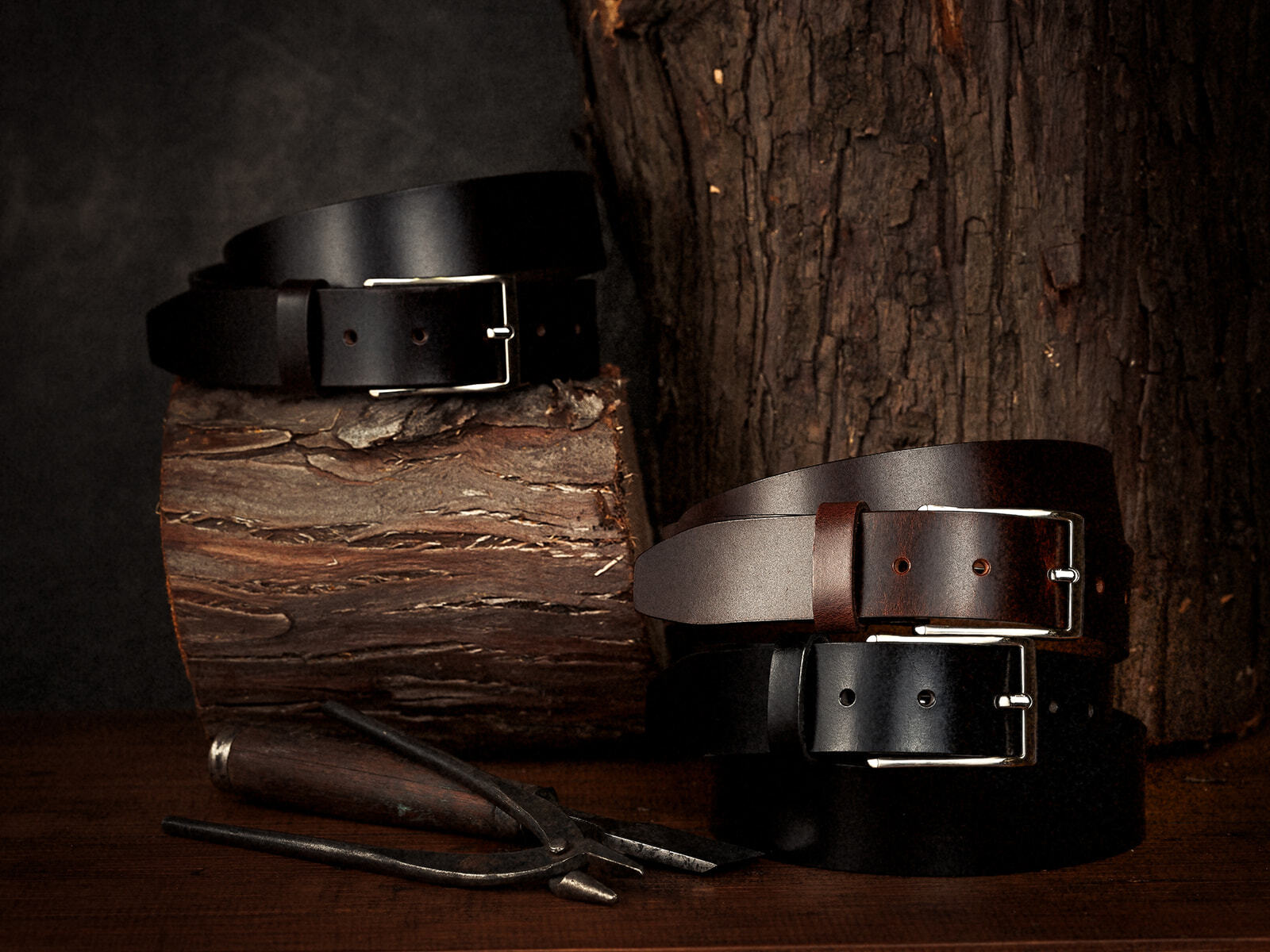
What Types of Belt Damage Are Repairable?
Not all damage is created equal. Some issues come from natural ageing and can be reversed. Others are symptoms of low-quality materials that simply can’t be brought back.
✔ Minor Cracking on Real Leather
Small cracks on the surface of natural leather can often be treated with conditioners and oils. These replenish moisture and restore flexibility.
✔ Drying or Fading
Colour loss, dryness, or surface dullness can usually be improved through gentle cleaning and reconditioning.
✔ Stretched Holes
A leatherworker may be able to reinforce or punch new holes if the stretch isn’t too severe.
✔ Loose Stitching or Hardware
Buckle screws, stitching, and keepers can often be repaired or replaced.
These issues tend to affect belts made from full grain leather or other top-tier hides, which maintain their fibre structure over time — learn more about these materials in our article on full grain leather.
What Can’t Be Repaired?
✘ Peeling or Flaking Material
If your belt is peeling, it’s usually made from bonded or PU leather — not genuine hide. These products cannot be restored because they don’t contain real leather fibres.
✘ Deep Cracks Through the Leather
If cracking goes all the way through the belt, the structural fibres are already broken.
✘ Severe Warping or Splitting
Once leather fibres separate internally, the belt can’t regain its strength.
✘ Inner Core Failure
Belts with cardboard or foam cores (common in budget belts) cannot be restored.
In short, natural leather ages — but fake leather fails. Restoration is only realistic when the material is strong to begin with.
How to Restore a Cracked Leather Belt (If It’s Real Leather)
Here’s what a simple at-home restoration routine looks like:
1. Clean the Belt Gently
Use a damp cloth to remove dirt. Avoid harsh soaps.
2. Apply Leather Conditioner
This restores oils and flexibility. Start with a small amount and build gradually.
Under normal circumstances, we do not recommend conditioning coated or finished leathers (such as genuine leather or buffalo leather), as conditioners can interfere with their protective surface.
However, once a belt has already cracked, the protective finish has typically failed. At this stage, light conditioning may help reduce further cracking and stiffness, but it will not fully reverse the damage.
3. Let It Absorb
Give the leather time to drink in the conditioner (usually a few hours).
4. Polish Lightly (Optional)
A finishing balm can restore colour and sheen.
5. Avoid Using the Same Notch Every Day
Switching between 2–3 holes reduces stress on any single point.
These steps won’t undo years of extreme damage, but they can improve appearance and prevent further cracking.
Why Belt Quality Matters More Than Repairs
A belt made from high-quality hide will outlast cheaper materials by decades — and it will age gracefully, not peel.
Buckle uses traditional manufacturing techniques, quality Australian hardware, and responsibly sourced materials, including partnerships with ethical tanning processes. These standards ensure every belt is built for long-term wear, not short-term fashion cycles.
When the foundational leather is strong, repairs are minimal. When it’s not — repairs aren’t possible.
When Should You Replace a Leather Belt Instead of Fixing It?
Here’s a simple rule:
If the belt is real leather, it can often be restored.
If it’s peeling, it can’t — because it isn’t leather.
Replace your belt if:
- the buckle mount is torn through,
- the leather has deep structural cracks,
- the belt has stretched beyond usability,
- the surface coating is peeling or bubbling.
In most cases, replacing a low-quality belt with a well-made one ultimately costs less than repeated repairs.
How to Extend the Life of Your Leather Belt
You can significantly extend the lifespan of a real leather belt with a few simple habits:
Keep it conditioned
Dry leather cracks. Depending on the type of leather, condition it every few months as per these care instructions.
Store it properly
Hang your belt or lay it flat — avoid tight rolls.
Rotate between belts
This reduces pressure on a single hole or bend point.
Avoid moisture and extreme heat
Cars, sheds, and toolboxes can dry out or warp the leather.
A well-made belt becomes better with age, developing a patina unique to its owner.
Why Buckle Belts Are Easier to Maintain
For more than a century, Buckle has prioritised durable materials, traditional craftsmanship, and transparency around sourcing. We work closely with tanneries following ethical tanning processes and responsible production standards, ensuring your belt begins its life with strength and integrity built in.
Because of this foundation, our belts rarely need serious repair — regular conditioning is usually all they require.
Want to Keep Your Leather Belt Looking Its Best?
Read our full Leather Guide and Care Instructions articles.
Related FAQs
Can a cobbler repair holes or stretched notches?
Sometimes. If the belt is full grain leather and the stretch is minor, a cobbler can reinforce the area or punch new holes.
Does conditioner fix cracks completely?
It restores flexibility and appearance but cannot reverse deep structural cracks.
Why do cheap leather belts crack so quickly?
Most “genuine leather” belts at low prices are bonded or mixed materials that lack proper fibre strength. They simply aren’t designed to last.